


21 Years of Pokémon!
- LazyGamer

- Dec 19, 2021
- 27 min read
With Pokémon Brilliant Diamond and Shining Pearl being only a month old and Pokémon Legends: Arceus right around the corner, I wanted to take a moment to recap the Pokémon games that have brought joy to many fans over the years. Although this may have been done many many times before on gaming blog sites and magazines over the years, it's not been done on LazyGamer, so were doing it anyways.
Pocket Monsters Red And Green- 1996


Pocket Monsters Red and Green were released in Japan in 1996 with the Pocket Monsters Blues Version being a special edition game being released later that year. These games would be the introduction and birthplace of the world of Pokemon and it's original 150 monsters.
Pokemon: Red and Blue- 1998


Two years later after the original Japanese releases of Pocket Monsters Red, Green, and Special Edition Blue, Pokémon Red and Blue were finally released in the U.S. as well as other countries only on the Nintendo Gameboy, sparking the international Pokémon craze, with the help of Trading Cards, Manga's and the Anime. Pokémon Red and Blue were the first Gameboy games to really utilize the Gameboy link cable allowing players to trade there Pokémon, which was vital to collecting all 150. Pokémon: Red and Blue introduced us to the Kanto region and legendary Pokémon like Zapdos, Moltres, Articuno, Mew and Mewtwo.
Pokemon: Yellow- 1999.

Pokémon Yellow was released on year after Pokémon Red and Blue and was a reinvented version making the game more similar to the events in the Anime. Instead of choosing Charmander, Bulbasaur, or Squirtle players were given a Pikachu as there starter Pokémon and their rival received and Evee.
Pokémon: Gold and Silver- 1999(2000)


Pokémon: Gold and Silver debuted on the Nintendo Gameboy Color in Japan in 1999 and to the rest of the world in 2000. While it contained many of the basic mechanics of the original Pokémon games, A time system was introduced using a real-time internal clock that keeps track of the current time and day of the week. Certain events, including Pokémon appearances, are influenced by this feature. New items were added, with some designed to exploit a new mechanic: Pokémon being able to hold items. A new type of item able to be held was the berry, which comes in varieties and can restore health or cure status effects. Other held items can give boosts to the Pokémon during battle. More specialized Poké Balls were introduced, which make Pokémon catching easier in certain situations. A new item called the Pokégear was introduced, functioning as a watch, map, radio, and phone, allowing the player to call other characters who offer their phone number. Trainers will call for a rematch and others will call about rare Pokémon that can be caught in a certain area. The game allowed us to venture out of the Kanto region and into the Johto region with over 100 new pokemon and even the legendary Pokémon Ho-oh, Luigia, Entei, Raikou and Suicine.
Pokemon: Crystal-2000

The gameplay of Pokémon Crystal is largely the same as in Gold and Silver, although it has several new features. It is the first Pokémon game to allow players to choose the sex of their character, while previously the character was always male. For the first time, Pokémon have brief animated sprites once entering battle; for example, when a Cyndaquil enters battle, the flames on its back flicker. This feature was absent in Pokémon Ruby and Sapphire and Pokémon FireRed and LeafGreen, before reappearing in Pokémon Emerald and all subsequent games. In addition, a couple of subplots were added, one involving the legendary Pokémon Suicune, featured on the front cover of the game, and the other involving the Unown. The game's most significant addition is the Battle Tower, a new building which allows players to participate in Pokémon Stadium-like fights. The Japanese edition of the game was exclusively bundled with the Mobile Adapter GB, a device that allowed for connecting with other players via a mobile phone.
Pokemon: Ruby and Sapphire- 2002


Pokémon: Ruby and Sapphire were released in 2002 exclusively to the Nintendo Gameboy Advance. The most prominent change in the battle mechanics is the introduction of double battles, in which the opposing parties each use two Pokémon at the same time. Consequently, certain Pokémon moves can affect multiple combatants at once. Multi battles were added alongside double battles. They are identical to double battles, but there are two trainers to a side, each controlling one of the two Pokémon sent out. Also new to the games are innate abilities and natures; the former is shared by every Pokémon of a certain species, while the latter may vary among a particular species. Abilities grant their holders certain powers in battle, such as immunity against certain types of moves or strengthening a certain type of move. Natures, like innate abilities, affect the strength of Pokémon in battle; however, they affect the stats of the Pokémon rather than directly affecting the strength of the moves. Another stat introduced in Pokémon Ruby and Sapphire is Condition, an important factor in Pokémon Contests, mini-games in which participants perform moves before a judge. Both Pokémon and their moves have a Condition, which is increased by using Pokéblocks, which are candies made from berries. Secret bases were added as a one-off feature where players could open up a hole in the world and customize the area with various items picked up in-game. Players who linked up with others who set up secret bases were able to battle an NPC version of that trainer within their secret base. Like Pokémon Gold, Silver, and Crystal, Pokémon Ruby and Sapphire keep track of real-life time; this influences events like tides and berry plant growth. However, unlike their predecessors, Ruby and Sapphire do not differentiate between day and night. Also, due to the differences in the technical specifications of Game Boy link cables and Game Boy Advance link cables, Ruby and Sapphire cannot be linked with Pokémon games of previous generations; one cannot battle with or trade to the previous generations. Ruby and Sapphire have limited e-Reader support. Nintendo released Battle-e Cards, a set of e-Reader cards that contained trainer battles in which the player could see previously-hidden Pokémon. A special e-Reader card called the Eon Ticket was also released; obtained through the Mystery Gift function, the Ticket allows the player to reach a place called Southern Island. There, the player faces either Latios or Latias, depending on which version of the game is used.
Ruby and Sapphire are also able to connect to the GameCube games Pokémon Colosseum, Pokémon XD: Gale of Darkness and Pokémon Box: Ruby and Sapphire. In the former two, once players reach a certain point in the game, they are able to transfer Pokémon between Colosseum / XD and Ruby / Sapphire. Additionally, those who pre-ordered Colosseum were able to access the Pokémon Jirachi and see a preview of the movie Pokémon: Jirachi Wish Maker. Pokémon Box allows players to store and organize their Pokémon on the GameCube. Also, in the European version of Pokémon Channel, players could receive a Jirachi at a certain point in the game, which they could then transfer over to Ruby or Sapphire. Ruby and Sapphire welcomed players to the Hoenn region and introduced new legendary Pokémon like Groudon, Kyogre, Rayquaza, Latias and Latios.
Pokémon: FireRed and LeafGreen-2004.


Pokémon FireRed and Pokémon LeafGreen are 2004 remakes of the 1996 Gameboy role-playing video games Pokémon Red and Blue. New features include a contextual help menu and a new region the player may access after a certain point in the story. The games have compatibility with the Gameboy Advance Wireless Adapter, which originally came bundled with the games.
Pokemon: Emerald-2004
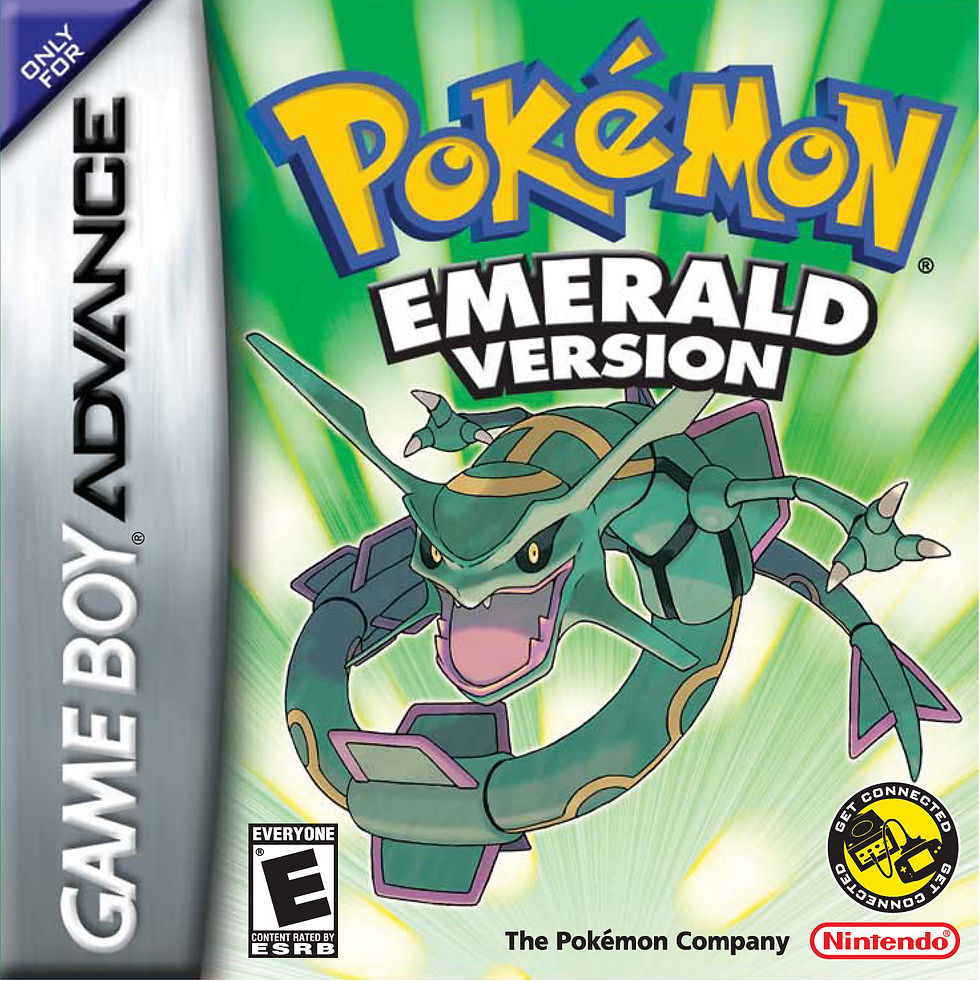
Pokémon Emerald is an enhanced versions of Pokémon Ruby and Sapphire featuring the same mechanics but with a slightly different story plot.
Pokemon: Diamond and Pearl-2006.


As with other generations of Pokémon games, Diamond and Pearl retain the basic gameplay of their predecessors while introducing additional new features. The day-night cycle makes a return and has increased from three times of day in Gold and Silver to five time periods in Diamond and Pearl: morning, day, afternoon, evening, and night. Diamond and Pearl also introduce several changes to battle mechanics. In previous generations, Pokémon moves were classified as "physical" or "special" based on their type; for example, all Fire-type moves were special and all Ground-type moves were physical. In Diamond and Pearl, however, moves are categorized into three groups. Attacks that make physical contact with the opponent are "physical", attacks that do not make physical contact are "special", and moves that do not deal damage are classified as "status". Some of the games' new features capitalize on the Nintendo DS's features. The Pokétch, a simulated smartwatch, resides on the DS's bottom screen and hosts various applications including a clock, calculator, map, counter, and a drawing pad. These applications are obtained throughout the game. Beneath Sinnoh's surface is the Underground, a large area used for wireless multiplayer gaming; in it, players can create and decorate secret bases, first featured in Pokémon Ruby and Sapphire, and participate in minigames. The items mined in the Underground can then be transferred into the player's bag in the main game. Diamond and Pearl also employ support for the Nintendo Wi-Fi Connection (since discontinued), allowing players to communicate through voice chat, trade, and battle online. The main system for trade is the Global Trade Station, which allows players to trade with people around the world. Players can search for any Pokémon that they have seen in the game and can offer their own; if another player is offering the requested Pokémon and is looking for the offered Pokémon, the trade occurs immediately. A trade does not have to be instant; an offer can be left for other players to browse and complete, even while the player is offline. Certain species of Pokémon traded internationally will have a Pokédex entry in the language of the game it originated from. According to Pokémon art director Ken Sugimori, the Global Trade Station was the new feature he was most pleased with. Pokémon Contests are events in which the player's Pokémon compete in a show to win ribbons and, in Diamond and Pearl, they consist of three stages, two more than the Contests of the Game Boy Advance games. In the Visual Competition stage, players use the Nintendo DS's touchscreen to place accessories on their Pokémon to boost a particular trait, such as "Cool" or "Cute", and earn points. In the Dance Competition stage, the player must tap buttons on the touchscreen in rhythm with the music. The final stage, Acting Competition, is similar to Pokémon Contests of the Game Boy Advance games; Pokémon use their moves to appeal to the judges and crowd. Like Pokéblocks in the third generation games, baked goods called Poffins can be made from berries and fed to Pokémon in order to boost a particular trait, and therefore, the likelihood of success in a relevant Contest. In addition to compatibility with each other, Diamond and Pearl offer compatibility with the third generation Pokémon games, Pokémon Ruby and Sapphire, Emerald, FireRed and LeafGreen, Pokémon Ranger, and Pokémon Battle Revolution. After earning the National Pokédex in Diamond and Pearl, the player can "Migrate" Pokémon from the Game Boy Advance games to Diamond and Pearl by inserting a Game Boy Advance cartridge into the Game Boy Advance cartridge slot of the Nintendo DS while Diamond or Pearl is in the DS slot. After six Pokémon are uploaded from the cartridge, they are sent to the Pal Park, an area where the player can capture the transferred Pokémon. Pokémon uploads are restricted to six every twenty-four hours per Game Boy Advance cartridge, and the player must capture the uploaded Pokémon before performing another transfer. Pokémon transferred to Diamond and Pearl this way cannot be sent back to a Game Boy Advance cartridge. After completing a special mission in Pokémon Ranger, the player will be able to send a Manaphy egg or Riolu from Ranger to Diamond or Pearl. Finally, players can wirelessly upload Pokémon from Diamond and Pearl to the Wii games Pokémon Battle Revolution and My Pokémon Ranch.
Pokemon: Platinum-2008.

Pokémon: Platinum is an enhanced version of Pokémon Diamond and Pearl. Platinum adds an area called the "Wi-Fi Plaza", which features several Pokémon species-themed mini-games and allows up to 20 players to be present in it. Platinum also introduces the Vs. Recorder, which allows players to record battles held in the Battle Frontier or on Wi-Fi. The Global Trade System (GTS), a service that allows players to trade anonymously over a Wi-Fi connection, returns in Platinum; one change to the GTS system allows players to be notified via email when a trade has commenced, though, outside Japan, this feature has been reduced to being merely a message on the player's Wii. A variety of changes have been made to the appearance and availability of Pokémon; Giratina, Shaymin, and Rotom all have new forms, with Rotom having four new forms. New items are also introduced to facilitate Pokémon form changes. Giratina and Shaymin's new forms can be achieved using the Griseous Orb and Gracidea Flower respectively. The trios of Articuno, Zapdos, and Moltres, along with Regice, Regirock, and Registeel, have been added to the game as well. The game also adds the Battle Frontier, a feature first introduced in Pokémon Emerald. Platinum's Pokémon Contests play similarly to Diamond and Pearl's; they feature four stages, awarding ribbons to Pokémon for having the best result. Baked goods called Poffins can be made from berries and fed to Pokémon to improve certain traits, depending on the kind of Poffin made. In addition to compatibility with Diamond and Pearl, Platinum is also compatible with the third generation Pokémon role-playing games available on the Game Boy Advance through the DS's Game Boy Advance slot. Players can also upload Pokémon from Platinum to the Wii games Pokémon Battle Revolution and My Pokémon Ranch, though the latter is only compatible with Platinum in Japan. Pokémon Platinum, while keeping to the same plot as Diamond and Pearl for the most part, introduces several new elements to it. Two new characters are introduced - the first being Charon, a scientist in Team Galactic as well as the fourth and newest commander alongside Mars, Jupiter, and Saturn, and the other being a detective investigating Team Galactic under the codename "Looker". Giratina is also the focus of the plot, whereas Dialga and Palkia were the focuses of Diamond and Pearl, respectively. However, the player can still obtain both Dialga and Palkia once completing the game, whereas, in Diamond and Pearl, the player could only catch Giratina and the respective game's mascot. The player has multiple chances to catch Giratina during the game, with this being the first instance of the game giving the player the chance to catch a legendary Pokémon again after defeating it. New scenes were added into Platinum's plot in order to advance the story and give it more depth. One of these scenes includes the player character sneaking into Team Galactic's headquarters alongside Looker and witnessing a speech performed by Team Galactic's leader, Cyrus. In this speech, Cyrus depicts his plan to use the legendary Pokémon Dialga and Palkia to create a new world without spirit.
Pokemon: HeartGold and SoulSilver-2009.


Pokémon HeartGold and Pokémon SoulSilver are 2009 remakes of the 1999 Gameboy Color role-playing video games Pokémon Gold and Silver, also including features from Pokémon Crystal. In HeartGold and SoulSilver, the first Pokémon in the player's party can follow them in the overworld, echoing a mechanic in Pokémon Yellow where Pikachu follows the player. This mechanic was also used in a limited fashion in Pokémon Diamond, Pearl, and Platinum when the player is in Amity Park with a "cute" Pokémon. The player may talk to the Pokémon to see or check on how that Pokémon is feeling, and occasionally it may pick up items. A new minigame called the Pokéathlon uses the Nintendo DS touchscreen and allows Pokémon to compete in events such as hurdling. The Japanese versions retain slot machines found in previous games, while the international releases of the titles replace the slot machines with a new game called "Voltorb Flip", described as a cross between Minesweeper and Picross. Another new item, the GB Sounds, changes the background music to the original 8-bit music from Pokémon Gold and Silver. HeartGold and SoulSilver can access the Nintendo Wi-Fi Connection (since discontinued) to trade, battle, and interact with other players of these games, as well as players of Pokémon Diamond, Pearl, and Platinum. After completing a special Wi-Fi mission download on Pokémon Ranger: Guardian Signs, the player can send a Deoxys to HeartGold and SoulSilver.
Pokemon: Black and White-2010.


The graphics have been improved from Diamond and Pearl. The dialog boxes of previous games have been changed to speech balloons that appear over other characters' heads, allowing more than one character to speak at once. Japanese players can have kanji appear on screen, rather than only hiragana and katakana. During battles, the sprites of the Pokémon are fully animated and the camera changes position to highlight specific parts of the battle. In addition to continuing the day and night cycle introduced in Gold and Silver, Black and White introduces a seasonal cycle, with the seasons advancing every month rather than being linked to the calendar. Outside areas appear differently depending on the season, such as changing of leaves in autumn or snow on the ground in winter. Certain areas are only accessible during certain seasons, and different Pokémon can be found in the wild in winter where others are encountered in the other seasons. The Pokémon Deerling and Sawsbuck change their physical appearance to match the seasons. There are two new battle mechanics: Triple Battles and Rotation Battles. In Triple Battles, both teams must send out three Pokémon in a row at once; Some moves only allow Pokémon on the left or right side to attack the opponent's Pokémon on the same side or in the center. Changing position takes up one turn. In Rotation Battles, each side sends out three Pokémon at once, but they are arranged in a circle that can be rotated at will. Black has more Rotation Battles than Triple Battles, and the opposite is true in White. Another introduction is Combination Moves: a starter Pokémon can be taught one of three moves, and using them together in Double or Triple battles produces more powerful attacks. In the wild, walking through darker-colored tall grass can trigger Double Battles against wild Pokémon rather than only Single Battles with lighter-colored grass. Occasionally, the player can find rustling patches of grass and rippling water, where they can encounter either a rare Pokémon, a Pokémon more common in the opposite game version, or the highest evolutionary form of a Pokémon whose lower forms can normally be found in the area. This is the only way to capture Pokémon such as Audino, Emolga, and Alomomola. Also, dust clouds in caves and the shadows of flying Pokémon on certain bridges can be entered to either find a rare item or encounter Drilbur, Excadrill, Ducklett, or Swanna, none of which can be found in the wild otherwise. Occasionally, when throwing a Poké Ball, the capture rate is highly increased, triggered by a random event. There are also new side-games and sidequests: the player can compete in Pokémon Musicals, a side-game similar to the Pokémon Contests of previous games; the Battle Subway, similar to the Battle Towers and Battle Frontiers of previous games; and on the Royal Unova, a cruise ship that the player can ride and fight Trainers aboard to win otherwise rare items. The C-Gear replaces the Pokétech from Diamond and Pearl on the Nintendo DS's bottom screen. It controls the game's wireless capabilities, including infrared (IR) communication for battling and trading, wireless communications in the Xtranceiver video chat access to the Entralink to transfer content from the Pokémon Dream World, using the Wi-Fi to sync with the Pokémon Global Link servers, and the new "Pass By mode" which allows the game to communicate with other copies through infrared while the DS is asleep. The Feeling Check function tests the compatibility between two players and awards them items accordingly. In the "Pass By" feature, the player answers various survey questions and receives one of several items depending on how many other players they have connected with. In the "Random Matchup" feature, the player can battle others randomly. When playing against others online or in IR battles, a new mechanic called the Wonder Launcher allows healing items to be used in battle. Two features were added to transfer Pokémon from older DS Pokémon games to Black and White. For normal transfer, the Poké Transfer feature is available after completion of the main storyline. Unlike the "Pal Park" feature from previous games, the Poké Transfer is a mini-game in which after six Pokémon are transferred, the player uses the touch screen to launch Poké Balls at the transferred Pokémon to catch them within a time limit. Another feature called the Relocator is used to transfer the Pokémon given away in promotions for the film Pokémon: Zoroark: Master of Illusions so the player can obtain the rare Pokémon Zorua and Zoroark. Unlike the Poké Transfer, this is available before the main game is completed. Unique to Black and White is the Pokémon Dream World, which is dependent on the official Pokémon Global Link website. Here, the player can befriend Pokémon that are not normally obtainable in-game and that have unique abilities. This occurs after syncing the game back with the Dream World, similarly to the Pokéwalker from HeartGold and SoulSilver. The player can maintain a house in the Dream World that other players can visit as well as grow berries. In addition to allowing access to Pokémon acquired in the Dream World, the Entralink also enables players to interact with each other and play side-games. These side-games award points that can be traded for temporary powers such as increasing experience, improving capture rate, or lowering prices of items in Poké Marts.
Pokemon: Black 2 and White 2-2012.


A new game mechanic introduced in Black 2 and White 2 is the "PokéStar Studios" side-game, where the player character participates in the filming of a movie involving Pokémon and other actors. A character named Brycen-Man also appears, as Brycen from the original games returned to his movie career. Another new mechanic is the Pokémon World Tournament, where the player battles powerful trainers from the previous games in the series, ranging from Gym Leaders Brock, Misty, Volkner, and Giovanni to Champions Cynthia, Steven, and Lance. Another new mechanic is the Key System, a feature that is unlocked after beating the game. With it, you can unlock difficulties and new additional areas like Black Tower or White Tree within the same version. You can also unlock chambers, where you can capture Regirock, Registeel, and Regice. The events of Pokémon Black 2 and White 2 take place two years after the events of Black and White, with new locations that weren't accessible in the previous games. These are places like Virbank City, Lentimas Town, Humilau City, along with areas called Hidden Grottoes, where you can catch special Pokémon. Also, instead of starting in Nuvema Town, the player begins their journey in Aspertia City, a new city located in the southwest of Unova. Unova's design is modeled after New York City.
Pokemon: X and Y-2013.


Pokémon X and Y are the first titles in the main series presented in fully 3D polygonal graphics, allowing for more interactivity with the overworld and more dynamic action during battles. Players are also able to customize their Pokémon trainer's appearance, choosing gender, skin tone and hair color at the start of the game, and can later acquire outfits and accessories in-game to change their character's look. Joining the previous generations of Pokémon are all new species, such as the new starter Pokémon; Chespin, Fennekin and Froakie, and the Pokémon that are, within the fictional Pokémon world, described as legendary Pokémon, namely Xerneas, Yveltal and Zygarde. Players will also be able to choose from one of the classic starter Pokémon from Pokémon Red and Blue later on in the game. The new Fairy-type is introduced for both new and old Pokémon, the first new type added to the series since Pokémon Gold and Silver. The game's developers stated the addition was used to balance the Dragon-type. A new element in the series is Mega Evolution, in which fully evolved Pokémon, such as Mewtwo and Lucario, can use special items called "Mega Stones" to temporarily evolve further into Mega Evolved forms during battle, with a couple of Pokémon having more than one possible Mega form available. Also introduced are Sky Battles, and Horde Encounters. The former are mid-air trainer battles that only airborne Pokémon can participate in; these were added to show off the game's 3D-capabilities and provide a new perspective of battling. The latter are one-versus-five wild encounters designed to be more difficult than standard one-versus-one wild battles. Pokémon-Amie lets players interact with their Pokémon using the 3DS' touchscreen and camera, playing with them and giving them treats to strengthen their bonds between trainer and Pokémon, ultimately affecting the way the Pokémon act during battle. Super Training features various minigames that help build the base stats of the player's Pokémon, which in turn unlocks training bags that can be used by Pokémon to grow stronger on their own. Along with the many additions that X and Y introduced, various improvements to the communication features were also implemented. Using the Player Search System (PSS), players can encounter and keep track of various online players, including strangers, allowing them to easily initiate battles or trades. The Holo Caster allows the player to receive messages and updates from NPCs via StreetPass and SpotPass. Wonder Trade is a new trading feature which allows players to trade one of their Pokémon in exchange for a random one from another player. Other features include O-Powers, temporary powers that can increase stats and can be exchanged with other players, and improvements to the Global Trade System, allowing players to request Pokémon they have not encountered. At certain points in the game, players will be able to take in-game screenshots, which they can then share on the Pokémon Global Link website. Pokémon Bank is an optional paid cloud storage service that allows players to store up to 3,000 Pokémon online to be shared amongst whichever physical or downloaded copies of the games they own. Another application called Poké Transporter allows players to upload Pokémon owned in Pokémon Black, White, Black 2, and White 2 to Bank, which can then be imported into X and Y. There are plans to use these applications for future games in the series. These applications, announced for release on 27 December 2013, were postponed to 5 February 2014, due to the volume of traffic on the Nintendo Network service.
Pokemon: Omega Ruby and Alpha Sapphire- 2014.


Pokémon Omega Ruby and Pokémon Alpha Sapphire are 2014 remakes of the 2002 Gameboy Advance role-playing video games Pokémon Ruby and Sapphire, also including features from Pokémon Emerald. Though Pokémon Omega Ruby and Alpha Sapphire are remakes of games from the third generation, they retain changes made in later generations, such as the type split from the fourth generation and unlimited TM usage and triple battles from the fifth generation. They also retain most of the features of Pokémon X and Y, such as Mega Evolution and Super Training. The games introduced new features including Primal Reversion for Groudon and Kyogre, as well as using Latios or Latias to fly around Hoenn. When flying around on Latios or Latias players may encounter "mirage spots". These spots feature Pokémon not otherwise available in the Hoenn region, as well as numerous legendary Pokémon from previous generations. A new side quest is featured in Omega Ruby and Alpha Sapphire, called the "Delta Episode". The player must work with the new character Zinnia, Steven Stone, and Professor Cozmo to find a way to stop a meteor from crashing into the planet, which requires capturing the legendary Pokémon Rayquaza in order to stop the meteor that holds the mythical Pokémon Deoxys.
Pokemon: Sun and Moon-2016.


Pokémon Sun and Moon are presented in fully three dimensional (3D) polygonal graphics, like their predecessors, allowing for more interactivity with the overworld and more dynamic action during battles. However, the character models in Sun and Moon possess more realistic proportions compared to chibi-styled models used in Pokemon X and Y or Pokémon Omega Ruby and Alpha Sapphire. Players are also able to customize their Pokémon trainer's appearance, choosing gender, skin tone and hair color at the start of the game and can later acquire outfits and accessories to change their character's appearance. Joining the previous generations of Pokémon are all new species, such as the new starter Pokémon; Rowlet, Litten and Popplio and the Pokémon that are, within the fictional Pokémon world, described as legendary, namely Solgaleo and Lunala.
Pokémon Sun and Moon are the first entries in the series to be available in Chinese, both Simplified and Traditional, along with English, French, Spanish, Italian, German, Japanese and Korean, for a total of nine available languages. The games introduce variants of Pokémon introduced in older games with new typings and appearances, known as Alolan Forms. Alolan Vulpix and Ninetales, which are Fire types in other regions, are respectively Ice and dual Ice and Fairy types. Alolan Sandshrew and Sandslash, which are Ground types in other regions, are Ice and Steel types. Alolan Meowth and Persian, which are Normal types in other regions, are Dark types. Some Pokémon evolutions have gained dual typings as well, such as Alolan Marowak which is now a Fire and Ghost type and Alolan Raichu, an Electric and Psychic type. Throughout the game, players utilize a Rotom-possessed Pokédex on the bottom touchscreen, which displays a minimap containing markers for story objectives. Pokémon Sun and Moon introduce a powerful new type of move known as Z-Moves which can only be used once per battle. Hidden Moves, which were used to navigate terrain in past games, have been replaced by specialized Pokémon that can be summoned at will. The "Poké Finder" is a function of the Rotom Pokédex which allows players to take photos of Pokémon in the wild, similar to Pokémon Snap. In addition, the two games' clocks are set 12 hours apart from each other, with Sun operating on the 3DS' time and Moon operating 12 hours ahead. Character customization as previously seen in X and Y returns in Sun and Moon. A new "Pokémon Refresh" feature enables players to care for and feed their Pokémon. Mega Evolution, a game mechanic first introduced in X and Y, returns in Sun and Moon. The Battle Tree is a location which allows players to battle or team up with Pokémon trainers, including Kanto region trainers Red and Blue. Players can trade or battle with other players online. From a location called the Festival Plaza, players can participate in "Global Missions", where people from across the world work towards a set target — such as catching 100 million Pokémon collectively. Pokémon caught in Pokémon X, Y, Omega Ruby and Alpha Sapphire can be transferred to Sun and Moon. The games are also compatible with Pokémon Bank, an online Pokémon storage system introduced during the previous generation of Pokémon games. In a special Pokémon Direct on 26 February 2016, Tsunekazu Ishihara from The Pokémon Company announced that Pokémon caught in the Virtual Console versions of Red, Blue, and Yellow are transferable to Sun and Moon via Pokémon Bank. Compatibility with Pokémon Bank was initially planned to be available at the games' launch but was delayed and later became available on 24 January 2017. Tomy also released a peripheral interactive toy resembling a Z-Ring, which synchronizes with the use of Z-Moves in the games.
Pokemon: Ultra Sun and Ultra Moon- 2017.


While set in an alternate version of the Alola region, the mechanics and graphics remain largely the same as Pokémon Sun and Moon, with the primary differences being its modified storyline now including the Ultra Recon Squad. The player character designs are also different, though they remain customizable. "Global Missions", where players across the world work towards a collective goal, also make a return. Ultra Sun and Ultra Moon introduce new Ultra Beasts: Stakataka, Blacephalon, Poipole and its evolution, Naganadel. In addition, there are new forms for the legendary Pokémon Necrozma, dubbed "Dusk Mane" and "Dawn Wings" forms, which are achieved by absorbing the legendary Pokémon Solgaleo and Lunala, respectively; it is conceptually similar to Black and White Kyurem from Black 2 and White 2 and Lusamine's mutated form from the original Sun and Moon. Also, a new Lycanroc form was added, Dusk Lycanroc. Players can now travel around the Alola region to collect Totem Stickers, which allow the player to receive a Totem-sized variant of a Pokémon. Three new activities have been added: Mantine Surf, which allows the player to surf across the region's seas—it also serves as an alternate way of earning Battle Points; Alola Photo Club, which allows players to take pictures of their player character with Pokémon in various poses; and Ultra Warp Ride, which allows the player to travel through varying Ultra Wormholes and encounter Ultra Beasts in their own worlds—in addition to finding legendary Pokémon from every game in the series, up to three times, and an increased chance for shiny Pokémon to appear. New Z-Moves are available for multiple Pokémon, including Solgaleo, Lunala, Lycanroc, Mimikyu and Necrozma. An upgrade to the Rotom Pokédex adds Roto-Loto, which allows the player to use boosts, akin to O-Powers from the previous generation; and Z-Rotom Power, which allows players to use up to two Z-Moves per battle.
Pokemon: Let's Go Pikachu and Let's Go Evee-2018.


Pokémon: Let's Go, Pikachu! and Pokémon: Let's Go, Eevee! are 2018 remakes of the 1998 Gameboy Color role-playing video game Pokémon Yellow. Pokémon: Let's Go, Pikachu! and Let's Go, Eevee! are set in the Kanto region and include the original 151 Pokémon in addition to their respective Mega Evolved forms from Pokémon X, Y, Omega Ruby and Alpha Sapphire and their Alolan Forms from Pokémon Sun and Moon. Let's Go, Pikachu! and Let's Go, Eevee! feature common elements of the main series, such as battling non-player character Pokémon Trainers and Gym Leaders with caught Pokémon creatures. However, when facing wild Pokémon, instead of battling them with the traditional battle system like in past games, the catching of Pokémon uses a system that is reminiscent of the mobile spin-off game Pokémon Go. By using the motion controls of the Joy-Con controller or Poké Ball Plus peripheral, players can throw berries to pacify a Pokémon or Poké Balls to attempt to capture it. The evolution mechanic from previous games returns in Let's Go, Pikachu! and Let's Go, Eevee!. However, as with Pokémon Yellow, the player's starting Pikachu or Eevee cannot evolve; only other Pokémon that the player has caught, including ones of the same species as the partner Pokémon. Some features, like Pokémon breeding and HMs, are absent from the games. Players can trade Pokémon and battle other players both locally and online, with online features being simplified in comparison with previous games. Some features—including the Global Trade System, Wonder Trade, and Battle Spot—are absent from Let's Go, Pikachu! and Let's Go, Eevee!. In order to connect with others to trade or battle online, players must use a code composed of three Pokémon glyphs, selected from a total of eight. When two players enter the same code, they are connected to trade Pokémon with or battle each other. A subscription to the Nintendo Switch Online service is required to use online functionality. Although Let's Go, Pikachu! and Let's Go, Eevee! feature integration with Pokémon Go, this is optional. Players can transfer the original first generation Pokémon and their respective Alolan Forms from Pokémon Go to Let's Go, Pikachu! or Let's Go, Eevee!. They then appear at the Go Park—an in-game location where the player can explore and interact with or catch Pokémon that are walking around. Pokémon with higher CP or levels are harder to catch, in that the catch attempt has a higher chance of failing. Users are also able to exchange unspecified "gifts" between Pokémon Go and Let's Go, Pikachu! or Let's Go, Eevee!.
The games support the Poké Ball Plus, an optional controller shaped like a Poké Ball which features an analog stick, motion control support, HD Rumble feedback, and lighting effects. The analog stick doubles as a capture button in case the player does not wish to use the motion controls. During Nintendo's E3 2018 Nintendo Direct presentation on 12 June 2018, it was revealed that the Poké Ball Plus would come with a Mew that can be transferred to the games. It functions similarly to the Pokewalker because it can be used to take Pokémon for a stroll in the real world.
Pokemon: Sword and Shield-2019.


The games introduce several new features to the series. These include cooperative raid encounters, the Wild Area, and "Dynamaxing" and "Gigantamaxing", both of which temporarily allow Pokémon to grow to larger sizes. The Wild Area is a fully explorable open world area with free camera movement and dynamic weather, which has implications on which Pokémon species appear at a given time. Gigantamaxing is limited to select Pokémon and feature different forms from the Pokémon's normal appearance. A new mechanic called "Poké Jobs" tasks the player's Pokémon with completing requests, such as assisting in construction or cooking, to gain experience or rare items. Pokémon Gyms make a return after being absent in Sun, Moon, Ultra Sun and Ultra Moon. As is typical with the series, the two games have version-exclusive content such as certain Pokémon and, for the second time, Gym Leaders. A new 'Camp' mode allows the player to interact and play with their Pokémon and cook different types of curry to provide them with bonuses. New customization options for the player character have been added, like outerwear and other accessories. In most instances, the Pokémon box can now be accessed outside of Pokémon Centers. Internet connectivity to other players is supported for functionality such as trades, battles, and encountering other trainers in the Wild Area; these functions however require a paid subscription to Nintendo Switch Online. Sword and Shield only support direct game-to-game connectivity between themselves. The games are also compatible with Pokémon Home, an online cloud storage service for storing Pokémon, released in February 2020. Supported Pokémon can be transferred to the games from the Nintendo 3DS app Pokémon Bank, Pokémon Go and Pokémon: Let's Go, Pikachu! and Let's Go, Eevee! via Pokémon Home. Home is the only path to bringing Pokémon from previous games into Sword and Shield.
Pokemon: Brilliant Diamond and Shining Pearl-2021.


Pokémon Brilliant Diamond and Pokémon Shining Pearl are 2021 remakes of the 2006 Nintendo DS role-playing video games Pokémon Diamond and Pearl. Gameplay of Pokémon Brilliant Diamond and Shining Pearl is similar to the original Diamond and Pearl games, comparable to previous remakes such as Omega Ruby and Alpha Sapphire. The games are presented in a top-down isometric third-person perspective, though with a distinct visual style.
Pokemon Legends: Arceus- 2022.

Pokémon Legends: Arceus is an action role-playing game that preserves the core gameplay of past entries in the main line series. The game is set in a bygone era of the Sinnoh region's history (which appears to be based on Japan in the 19th century), when it was known as the Hisui region, long before the events of Pokémon Diamond and Pearl and its remakes take place. It was stated that the objective of the game would be to create Hisui's first Pokédex. The mythical Pokémon Arceus will play a major role in the story. Players can capture Pokémon directly in the overworld immediately without going through a battle and can engage in battle by releasing Pokémon they have previously captured near a wild Pokémon (some wild Pokémon still need to be caught via battle though). Poké Balls in this era were made of wood and puffed steam when the Pokémon was caught. At the start of the game, three starter Pokémon options are available: Rowlet (from Pokémon Sun and Moon), Cyndaquil (from Pokémon Gold and Silver) and Oshawott (from Pokémon Black and White), making it the first main series game to feature starter Pokémon from three different generations of games. There are base camps positioned in the overworld that assist the player in many ways. Aside from serving as places where players and their Pokémon can rest, this is where players can report to Professor Laventon about their results. The player can craft items like Poké Balls, smoke bombs and more by collecting Apricorns, Berries and the like. For instance, if the player collects an Apricorn and a type of stone called a Tumblestone, the player can craft a standard Poké Ball. For the first time in the Pokémon series, the player character can now take damage directly from wild Pokémon and falling from high places. If the player takes too much damage, the player will black out, and will lose items stored in the bag. The player can recover at the base camp.
When a Pokémon is sent out into battle, it can use its moves in two different styles: Strong Style and Agile Style. If the player chooses the Strong Style, the attack power of the player's Pokémon will increase, but its action speed will decrease. If the player chooses the Agile Style, the action speed of the player's Pokémon will increase, but its attack power will decrease.
Some Pokémon have red eyes and are bigger than normal. They are called Alpha Pokémon, and they chase down the player when they sense the player's presence. Though they are tough opponents, they can be caught by the player, and either catching or defeating them will cause them to drop rare items.
Though Trainer battles were not yet a thing in the Hisui region's era, certain wardens, each taking care of a specific Pokémon, can battle the player. They forged strong bonds with their Pokémon. During the player's adventure, the player will receive an item called a Celestica flute. Using it can summon three special Pokémon that allow the player to ride them over land, sea, and sky.
Early on in the game, the player will receive a device known as the Arc Phone. It will assist the player, and it seems to have a connection with the Mythical Pokémon Arceus. Besides that, some Pokémon have brand new appearance and evolutions in the Hisui region compared to their appearances in other regions. For example, Zorua, previously discovered as a Dark type Pokémon with black and red fur, is completely different from Hisuian Zorua, which is a Normal/Ghost type Pokémon with white and red fur. If players have Pokémon Sword and Shield save data, players can obtain the Mythical Pokémon Shaymin. If players have Pokemon Brilliant Diamond and Shining Pearl save data, players can obtain the Mythical Pokemon.


Comments